
Not all freight is built to move inside four walls. For many shippers — especially in construction, manufacturing and industrial supply chains — standard enclosed trailers simply don't work. When freight is too large, too heavy or requires specialized loading, flatbed freight becomes the most practical and often the only viable solution.
But flatbed shipping isn't just "open trailer vs. closed trailer." It introduces a different level of complexity, from equipment selection and securement requirements to weather exposure and regulatory compliance. Making the wrong decision can lead to delays, added costs or even safety risks.
This guide breaks down everything you need to know about flatbed freight, including equipment types, cost drivers, compliance considerations and when open-deck shipping makes the most sense so you can move complex freight with confidence.
What is flatbed freight? When open-deck shipping is your best option.
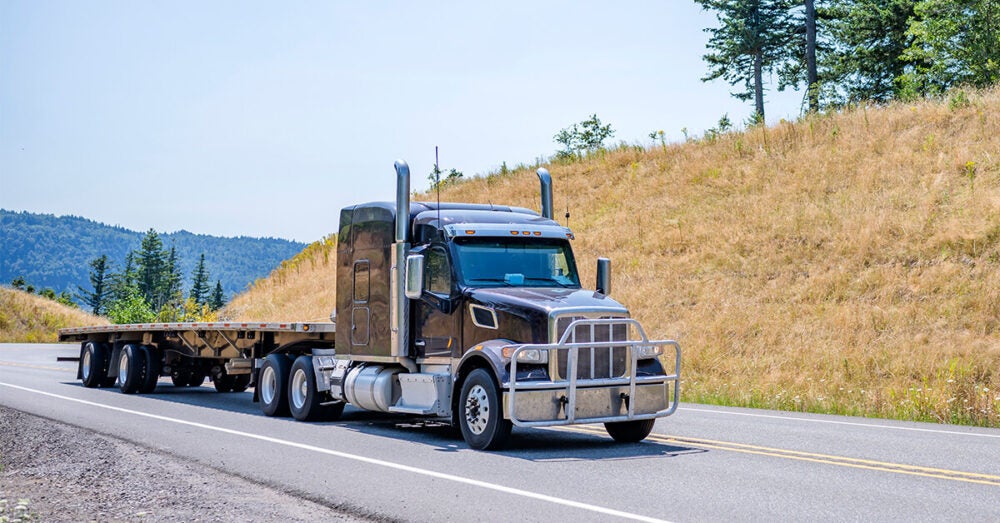
At its core, flatbed freight refers to cargo transported on an open-deck trailer without walls or a roof. That simple design creates a major advantage: flexibility. Unlike enclosed trailers, flatbeds allow loading from the top, sides or rear. This makes them ideal for freight that is oversized, irregularly shaped or requires crane or forklift access that a standard dock setup can't accommodate.
When flatbed shipping is required
In many cases, the decision to use flatbed shipping isn't optional. It's dictated by the physical characteristics of the freight.
You'll need open-deck equipment when:
- Freight exceeds standard trailer dimensions
- Cargo cannot be loaded through rear doors
- Loading requires cranes or side access
- Items are too heavy or awkwardly shaped for enclosed transport
This is especially common with oversized freight, where width, height or weight pushes beyond what a dry van can legally or practically handle.
When flatbed is optional but still the better choice
Even when freight technically fits inside an enclosed trailer, flatbed may still be the smarter option.
For example:
- Palletized machinery may fit dimensionally but require top loading
- Jobsite deliveries may lack dock access
- Certain materials are easier and faster to load from the side
In these scenarios, flatbed shipping improves efficiency and reduces handling constraints, even if it comes at a higher base rate.
Common flatbed freight examples
Flatbed trailers are used across a wide range of industries, including:
- Construction materials like lumber, drywall and steel
- Industrial machinery and equipment
- Vehicles and large components
- Prefabricated structures and modular units
Understanding the cost tradeoff
Flatbed freight typically costs significantly more than enclosed van shipping. That premium reflects:
- Specialized equipment
- Additional labor for loading and securement
- Tighter capacity in the flatbed market
However, when used correctly, flatbed shipping often reduces delays, handling risks and operational inefficiencies, making it a cost-effective choice in the bigger picture.
For a deeper dive, check out GlobalTranz's Truckload Freight Services.
Flatbed Equipment Types: Standard, Step Deck, Lowboy and RGN Explained
One of the most important decisions in flatbed shipping happens before a truck is ever booked: choosing the right equipment.
Selecting the wrong trailer type can lead to rejected loads, compliance issues or costly rebooking. Understanding the differences between flatbed equipment types helps ensure your freight is matched correctly the first time.
Flatbed trailer comparison
| Equipment Type | Deck Height | Max Freight Height | Best For |
| Standard Flatbed | ~5 ft | ~8.5 ft | General flatbed freight |
| Step Deck | ~3.5 ft | ~10 ft | Taller freight without permits |
| Lowboy | ~1.5–2 ft | 11–12+ ft | Heavy equipment |
| RGN | ~1.5–2 ft | 11–12+ ft | Drive-on machinery |
Standard flatbed: the industry default
The standard flatbed is the most commonly used trailer for flatbed freight.
With a deck height of about 5 feet and a maximum freight height of roughly 8.5 feet, it works for a wide range of shipments — from steel and lumber to palletized industrial goods. If your freight falls within legal dimensions and doesn't require specialized loading, this is typically the starting point.
Step deck: solving height challenges
A step deck (or drop deck) trailer introduces a lower rear deck, allowing taller freight to be transported without exceeding legal height limits.
This is critical for shipments that would otherwise require permits under wide load shipping or oversized regulations. By lowering the deck height, step decks allow cargo up to approximately 10 feet tall to move legally without added complexity.
Lowboy: for heavy and tall equipment
Lowboy trailers sit much closer to the ground, making them ideal for extremely tall or heavy freight such as construction equipment, generators or industrial machinery.
Because these loads often exceed standard legal limits, they may fall into oversized freight or even heavy haul trucking territory, requiring permits and additional coordination.
RGN: built for drive-on equipment
Removable gooseneck (RGN) trailers are designed for freight that can drive itself onto the trailer.
By detaching the front, the trailer creates a ramp — eliminating the need for cranes or external loading equipment. This makes RGNs the preferred option for moving construction vehicles, tractors and other self-propelled machinery.
Key takeaway:
Flatbed equipment selection isn't just about dimensions. It's about how the freight is loaded, secured and transported safely.
For more information, check out our resource on What are specialty freight services? Your guide to complex shipments.
Additional Flatbed Equipment Specs and Options Shippers Should Know
Beyond standard trailer types, a few key specifications and equipment options can significantly impact how flatbed freight is planned and executed.
Maximum trailer width
Both standard flatbed and step deck trailers have a maximum legal width of 102 inches (8.5 feet). Freight exceeding this threshold is considered oversized and will require permits.
Conestoga trailers: protection with flexibility
Conestoga trailers offer a hybrid solution between flatbed and enclosed shipping. Using a rolling tarp system, they protect freight from weather while still allowing side loading.
Typical Conestoga capacity includes:
- ~100 inches maximum width
- ~100 inches maximum height
- Up to 45,000 lbs.
This makes them a strong option for freight that needs protection but still requires the loading flexibility of an open deck.
Weight considerations
For standard flatbed shipments, 48,000 lbs. is the typical maximum freight weight for a legal load. Exceeding this usually requires specialized equipment or permits.
Flatbed vs. Enclosed Trailer: Cost, Risk and When Each Makes Sense
For many shippers, the biggest question isn't what type of flatbed to use. It's whether a flatbed is necessary at all. Choosing between flatbed shipping and enclosed trailers requires balancing cost, protection and operational needs. Understanding these tradeoffs helps avoid overpaying or under-protecting your freight.
Cost: paying for flexibility
Flatbed shipping typically comes at a premium, with rates 15–30% higher than enclosed trailers on similar lanes, according to some sources.
That cost reflects:
- Specialized equipment
- Additional labor
- Limited capacity compared to dry vans
However, trying to force freight into an enclosed trailer when it's not a good fit often leads to higher costs in the form of delays, rehandling or damage.
Weather exposure: managing risk
One of the most important differences is exposure.
Flatbed freight is subject to:
- Rain and snow
- Wind and debris
- Temperature fluctuations
While tarping can provide protection, it's not a perfect solution. Sensitive or high-value goods that require full environmental protection are generally better suited for enclosed trailers.
Security: visibility vs. protection
Flatbed loads are visible and accessible, which increases theft risk.
If your freight is:
- High value
- Easily resold
- Vulnerable to tampering
An enclosed trailer may be the safer choice.
Loading flexibility: where flatbed wins
Flatbeds offer unmatched flexibility in loading and unloading:
- Side loading with forklifts
- Top loading with cranes
- Easier access for irregular cargo
This is often the deciding factor in favor of flatbed shipping, especially in job site or industrial environments.
For more information, check out our resource on Managing Your Freight Costs with 3PL Freight Services.
Load Securement Requirements: FMCSA Rules Every Shipper Should Know
Flatbed shipping places a much greater emphasis on how freight is secured, not just how it's transported.
Unlike enclosed trailers, where cargo is contained within walls, flatbed freight relies entirely on external securement devices. That makes compliance with FMCSA load securement regulations critical.
Why securement matters more in flatbed shipping
Improperly secured freight can:
- Shift during transit
- Fall from the trailer
- Cause accidents or damage
Because of this risk, FMCSA regulations are strict and actively enforced.
Core FMCSA securement requirements
At a high level, regulations require:
- A minimum number of tiedowns based on cargo length
- Securement devices with sufficient working load limits
- Proper distribution of weight
These rules ensure that cargo remains stable under normal driving conditions, including braking and turning.
Commodity-specific rules
FMCSA also outlines detailed requirements for specific types of freight, including:
- Lumber and building materials
- Steel coils and metal products
- Machinery and vehicles
Each category has unique securement standards that must be followed.
Shipper responsibility and liability
A critical — and often overlooked — fact: Shippers share responsibility for load securement.
If freight is improperly loaded at origin, liability may fall on the shipper, even if the carrier accepts the load. This makes proper planning and communication essential.
Documentation and communication
To reduce risk:
- Clearly define securement requirements on the bill of lading
- Communicate handling instructions in advance
- Confirm carrier capabilities
Strong documentation ensures alignment between shipper and carrier before the truck arrives.
Want to make sure your shipment is properly protected? Check out our guide on the Difference Between Interest Insurance and Cargo Liability.
Tarping, Height and Weight Considerations for Flatbed Freight
Beyond securement, protecting freight and staying within legal limits requires careful planning.
Standard tarp sizes
Flatbed tarps come in several common sizes depending on the shipment:
- 16' x 24'
- 20' x 27'
- 24' x 27' (industry standard)
- 24' x 36'
Choosing the right tarp size ensures proper coverage and protection during transit.
When tarping isn't an option
Some commodities cannot be tarped, particularly those with:
- Sharp edges
- Abrasive surfaces
- Protrusions that can damage materials
In these cases, alternative equipment like Conestoga trailers may be required.
Height limitations explained
The maximum legal height for truck, trailer and freight combined is 13 feet 6 inches.
For standard flatbed trailers, this results in a practical freight height limit of approximately:
- 8 feet 6 inches (8'6') for non-permitted loads
Anything taller will typically require a step deck, lowboy or permits.
Overweight load rules
While loads exceeding 48,000 lbs. may qualify for permits, there is a critical requirement:
- The weight must be a single piece
For example:
- A single 55,000 lb. machine may be permitted
- Multiple items totaling 55,000 lbs. must be split across multiple trucks
Failing to account for this can result in load rejections or costly delays.
Oversized and Overweight Loads: Permits, Escorts and Route Planning
As shipments grow beyond standard dimensions, the complexity of flatbed shipping increases significantly.
While many flatbed loads stay within legal limits, some cross into oversized freight or wide load shipping, which introduces additional regulatory and operational requirements.
Understanding federal legal limits
Without permits, flatbed loads must remain within:
- 80,000 lbs. gross vehicle weight
- 8.5 feet wide
- 13.6 feet tall
- 53 feet long
Exceeding any of these thresholds triggers additional requirements.
Permit requirements and state variations
Oversized loads require permits in every state they travel through.
These permits:
- Are state-specific
- Must be approved before movement
- Often include restrictions on travel times and routes
Escort vehicles and safety measures
For wider or longer loads, escort vehicles may be required to:
- Warn other drivers
- Assist with navigation
- Ensure safe passage
Route planning considerations
Oversized freight must follow carefully planned routes that account for:
- Bridge weight limits
- Overhead clearances
- Road restrictions
Get more information in our blog on What to Do When Your Freight Gets Rejected.
Flatbed Freight Costs: What Drives Pricing and How to Get Competitive Rates
Flatbed pricing is more dynamic than standard truckload rates, making it essential for shippers to understand what drives cost.
Equipment availability and demand cycles
Flatbed capacity is closely tied to:
- Construction activity
- Infrastructure projects
- Industrial production
During peak seasons, demand spikes can tighten capacity and drive rates higher.
Lane dynamics and regional differences
Certain regions consistently command higher flatbed rates due to:
- High demand for construction materials
- Limited return freight opportunities
- Imbalanced freight flows
Securement and tarping costs
Flatbed shipments often require:
- Chains, straps and binders
- Tarps for weather protection
- Additional labor
These can add significant cost to total shipping costs.
Deadhead and backhaul opportunities
Flatbed carriers frequently travel empty on return trips.
Shippers who can align with these lanes may benefit from:
- Lower rates
- More flexible capacity
Strategies to reduce flatbed shipping costs
- Plan shipments ahead of peak demand
- Provide precise freight details
- Stay flexible with timing
- Leverage a 3PL for access to broader carrier networks
Want to save on freight shipping? Get a quote from GlobalTranz.
Working with a 3PL for Flatbed Shipping: Why Specialized Freight Needs Expert Coordination
Flatbed shipping introduces more variables than standard freight and more opportunities for costly mistakes. For many shippers, working with a 3PL isn't just helpful. It's a strategic advantage. With a 3PL, you get:
Access to specialized capacity
A 3PL connects you with:
- Flatbed-specific carriers
- Equipment specialists
- Capacity in tight markets
Expertise in equipment selection
Matching freight to the right equipment is critical.
A 3PL helps prevent:
- Booking the wrong trailer
- Load rejections
- Delays and added costs
Compliance and coordination support
Flatbed shipping requires careful coordination across:
- Securement requirements
- Documentation
- Carrier communication
A 3PL simplifies this process.
Project-level logistics management
For multi-load shipments or large projects, gives you:
- Centralized coordination
- Consistent communication
- End-to-end visibility
For a more in-depth look, check out our FAQ on Third-Party Logistics Services & 3PLs.
Frequently Asked Questions About Flatbed Freight
Final Thoughts: Making Flatbed Shipping Work for Your Business
Flatbed freight isn't just a niche shipping method. It's a critical solution for moving complex, high-value cargo.
When used correctly, flatbed shipping provides flexibility, efficiency and access to freight that simply can't move any other way. But it also requires a deeper understanding of equipment, compliance and cost dynamics.
By aligning the right equipment, planning ahead and working with experienced an 3PL partner, shippers can turn flatbed logistics from a challenge into a competitive advantage., shippers can turn flatbed logistics from a challenge into a competitive advantage.
Partner with GlobalTranz for Smarter Flatbed Shipping
Flatbed freight requires more than just capacity. It requires the right equipment, proper planning and expert coordination at every step. From selecting the correct trailer to managing securement and navigating complex shipping requirements, the details matter.
GlobalTranz helps shippers move complex freight with confidence. As a leading national 3PL, we combine deep truckload expertise with a vast carrier network to simplify even the most challenging flatbed shipping scenarios.
With GlobalTranz, you get:
- Access to 45,000+ truckload carriers, including flatbed and specialized equipment providers
- Competitive, negotiated rates backed by our national buying power
- Expert guidance on equipment selection, load planning and compliance
- End-to-end visibility with real-time tracking and proactive communication
Whether you're moving standard flatbed freight or navigating more complex shipping requirements, we help you avoid costly mistakes, reduce risk and keep your freight moving efficiently.
Ready to simplify your next flatbed shipment?
Let's build a smarter shipping strategy together. Contact GlobalTranz today for a free, customized freight consultation — and get the expertise you need to move with confidence. Reach out for a free consultation.